When people shop for a trailer, they usually focus on length, deck height and weight ratings. Brakes get less attention, but they are one of the most important safety systems on the whole rig. This guide explains how trailer brakes work, how to set them up and how to keep them working, so you can head into winter work with confidence.
When Does a Trailer Need Brakes?
Brake requirements are set by each state, and they are usually based on the trailer's gross weight. Many states require brakes on trailers above a certain weight, and some also require brakes on every axle or a breakaway system once a trailer crosses a higher threshold. Because the numbers differ from state to state, check the rules in your state and any state you plan to tow through.
Your tow vehicle's owner's manual may also list a trailer weight above which trailer brakes are required. Follow whichever rule is stricter.
The Main Types of Trailer Brakes
· Electric drum brakes. The most common type on utility, equipment, car hauler and dump trailers. When you brake, the brake controller in the truck sends current to an electromagnet inside each drum, which applies the brake shoes.
· Electric-over-hydraulic brakes. An electric signal from the controller runs a small hydraulic pump on the trailer, which works disc or drum brakes hydraulically. These are often found on heavier trailers.
· Surge brakes. A hydraulic system built into the coupler. When the truck slows, the trailer pushes forward and that motion applies the brakes. Surge brakes are common on boat trailers and do not need a brake controller. Some states limit their use, so check local rules.
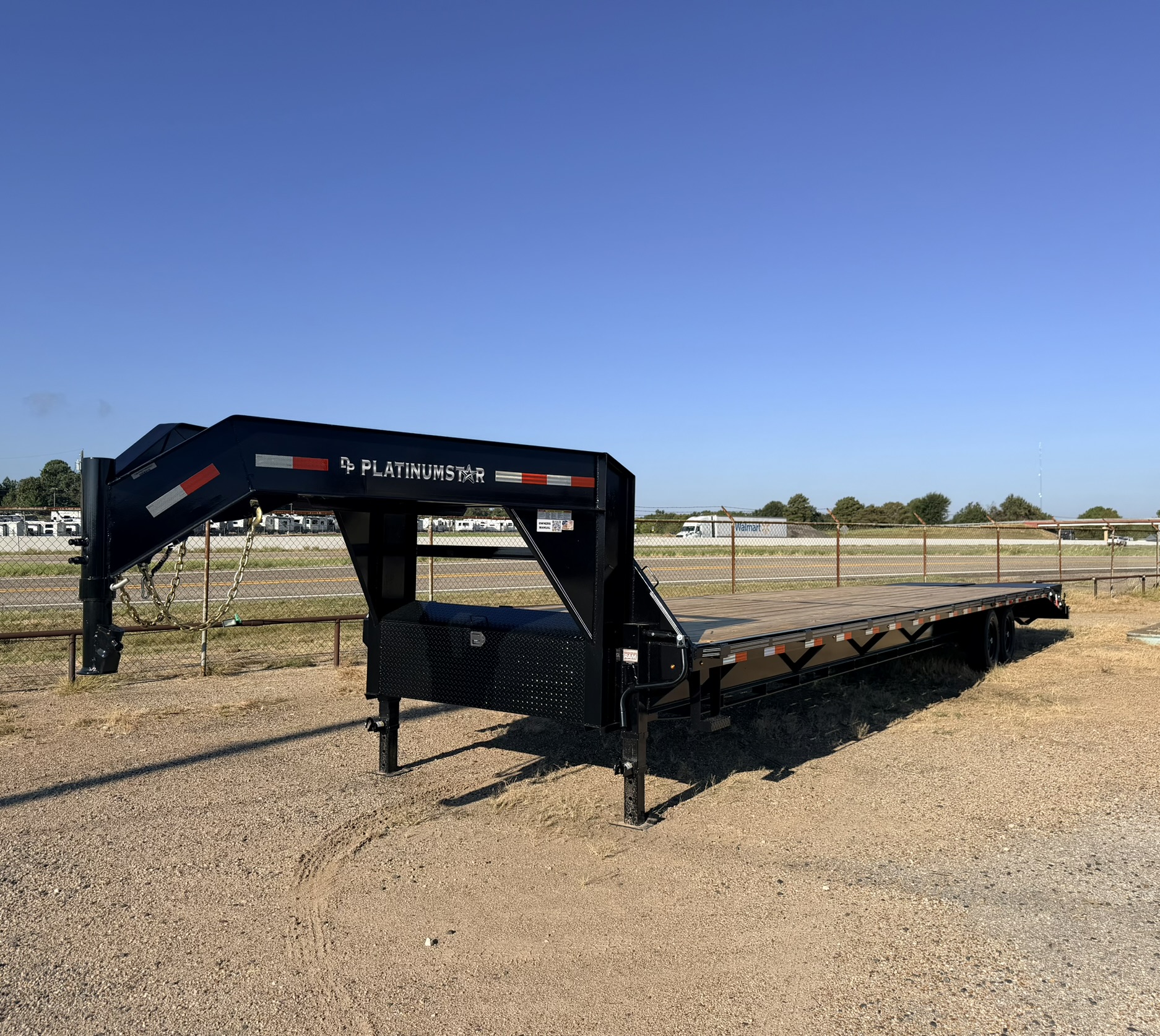
Most trailers in the equipment and work trailer world, including DP Platinumstar trailers, use electric brakes, so the rest of this guide focuses on them.
Brake Controllers: Proportional vs Time-Delayed
Electric brakes need a brake controller mounted in the tow vehicle. Some newer trucks have one built in. There are two common styles:
· Proportional (inertia-based) controllers sense how hard the truck is slowing and apply the trailer brakes to match. Most drivers find they give smoother, more natural stops.
· Time-delayed controllers ramp the trailer brakes up to a preset level over a set time after you press the pedal. They are simpler, but the feel does not change with how hard you stop.
How to Set Your Brake Controller Gain
"Gain" is how much braking power the controller sends to the trailer. The exact steps are in your controller's or truck's manual, but the general process looks like this:
1. Hook up the trailer, ideally loaded the way you will tow it.
2. Find a level, dry, empty paved area.
3. Drive straight at a low speed, often around 20 to 25 mph.
4. Squeeze the controller's manual lever or button all the way, without touching the truck's brake pedal.
5. If the trailer wheels lock up, turn the gain down. If the trailer barely slows the rig, turn it up.
6. The usual target is the most braking you can get just short of lockup.
Readjust whenever the load changes much. An empty trailer needs less gain than a loaded one.
What a Breakaway System Does
A breakaway system is a backup that applies the trailer brakes if the trailer ever separates from the truck. It has three parts: a small battery on the trailer, a switch, and a cable that clips to the tow vehicle. If the trailer comes loose, the cable pulls a pin out of the switch, and the battery powers the brakes to stop the trailer.
A few habits keep it ready to work:
· Clip the breakaway cable to the truck's frame or hitch, not to the safety chains or the ball mount where it could fail along with them.
· Leave some slack so it does not pull out during tight turns.
· Keep the breakaway battery charged. Many systems charge through the 7-way plug while towing, but a trailer that sits for weeks can run the battery down.
· Test it as the manufacturer recommends by pulling the pin with the trailer parked and confirming the brakes hold, then put the pin back right away. Do not leave it pulled, or the brakes and battery will be drained.
Keeping Trailer Brakes in Good Shape
Electric brakes are reliable, but they wear like any other brake. Your axle and brake manufacturer's manual lists the inspection and adjustment intervals for your trailer. In general:
· New brakes need to seat in. Many manufacturers describe a burnishing or break-in procedure for new brake shoes and magnets. Brakes may feel weak until they are seated.
· Adjust the shoes. Most electric drum brakes need periodic manual adjustment unless they are a self-adjusting design.
· Inspect magnets, shoes and drums. Look for uneven wear, scoring and grease or oil on the linings, which can come from a leaking hub seal.
· Check the wiring. Corrosion in the 7-way plug or broken wires are common causes of brakes that work on one side or not at all.
Pre-Trip Brake Checklist
· ☐ 7-way plug clean, fully seated and locked in
· ☐ Brake controller shows the trailer is connected
· ☐ Gain set for today's load
· ☐ Breakaway cable clipped to the truck with proper slack
· ☐ Breakaway battery charged
· ☐ Quick low-speed test with the manual lever before hitting the road
The Bottom Line
Good trailer brakes come down to three things: the right setup for your state and your load, a properly adjusted brake controller, and regular inspection. Spend a few minutes on them before each trip, and every stop will be shorter, smoother and safer.